Saturday, 25 April 2020

Tunnel Construction Techniques and Their Details

A tunnel construction is an underground passage provided beneath earth surface or water. Different methods of tunnel construction and their details are discussed.
In most of the cases tunnel construction is expensive but it saves time and provides comfort. Large excavation of soil or rock etc. is necessary for a tunnel construction. With the availability of modern equipment, excavation and back filling has become easier.
Tunnels can be used for roadways, railways and even as waterways also. In many cities, underground metro rail networks work inside a tunnel.
Methods of Tunnel Construction and Their Details
There are various types of construction techniques developed for construction of tunnels which are discussed below:
  • Cut and cover method
  • Bored tunnel method
  • Clay kicking method
  • Shaft method
  • Pipe jacking method
  • Box jacking method
  • Underwater tunnels

Cut and Cover Method of Tunnel Construction

Cut and cover method of tunnel construction is generally used to build shallow tunnels. In this method, a trench is cut in the soil and it is covered by some support which can be capable of bearing load on it.
The cutting can be done by two methods. One is bottom up method in which a tunnel is excavated under the surface using ground support. Another method is top-down method in which side support walls are constructed first by slurry walling method or contiguous bored piling.
Then roof is located on the top of the walls and excavation is carried out. Finally, base slab is constructed. Most of the Underground metro rail stations are constructed using cut and cover method.
Cut and Cover Method of Tunnel Construction

Bored Tunnel Method

Bored tunnel method is modern technology. In this case, tunnel boring machines are used which automatically work and makes the entire tunneling process easier. It is also quicker process and good method to build tunnel in high traffic areas.
Tunnels boring machines (TBM’s) are available in different types suitable for different ground conditions. These machines can be used in difficult conditions such as below the water table etc.
A special pressurized compartment is provided for TBM to work in below water table conditions. The workers should not enter that compartment except for repair works.
Care should be taken while TBM is in working conditions. The only difficulty with this TBM is its heavy weight. So, transportation is difficult and costlier.
Bored Tunnel Method

Clay Kicking Method of Tunnel Construction

This method is used for strong clayey soil conditions. This is an old method and used for small works like sewage pipes installations etc.
In this method, a hole is excavated into the ground and after some depth tunnel is excavated which is done by the clay kicker which lies 0n a plank at 45o angle.
An excavating tool is provided under clay kicker foot. The excavated using that tool is collected by other workers. This is well famous because it is the method used by Englishmen to put mines under the German empire during First World War.
Clay Kicking Method of Tunnel Construction

Shaft Method of Tunnel Construction

In this method tunnel is constructed at greater depth from the ground surface. The shaft is built up to the depth where tunnel is required.
Shaft is a permanent structure which is like well with concrete walls. At required depth, tunnels are excavated using TBM’s. Shafts are provided at both inlet and outlet of tunnels.
Intermediate shafts are also provided if tunnel is too long. After the construction process, these shafts can also be used for ventilation purpose as well as emergency exits.
Shaft Method of Tunnel Construction

Pipe Jacking Method of Tunnel Construction

Pipe jacking method is used to construct tunnels under existing structures like road ways, railways etc. In this method, specially made pipes are driven into underground using hydraulic jacks. Maximum size of 3.2-meter diameter is allowed for tunnels.
Pipe Jacking Method of Tunnel Construction

Box Jacking Method of Tunnel Construction

Box jacking method is similar to pipe jacking, but in this case instead of pipes, specially made boxes are driven into the soil. A cutting head is provided at the front side of the box. Excavated matter is collected within the box. Larger size tunnels can be excavated using box jacks up to 20 meters.
Box Jacking Method of Tunnel Construction

Underwater Tunnel Construction

An underwater tunnel is a structure which is built under water to make a way through it. If construction of bridge is not possible then under water tunnel is good choice.
Underwater Tunnel Construction
Under water tunneling is costly process but have advantages over bridge or ferry links. Immersed tubes or bored tunnel are two most common methods which are used to construct under water tunnels.

Thursday, 27 February 2020

Filtration


Railway Engineering

PART - 01

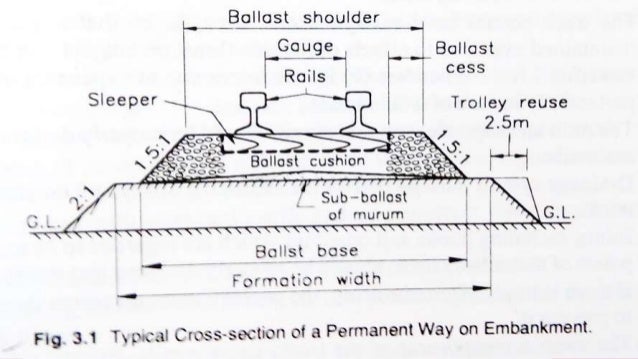
Image result for railway permanent way


What is Rails, Definition & Types of Rails


Definition of Rails

A rail is a steel bar extending horizontally between supports which is used as a track for rail road, cars or other vehicles

Types of Rails

Rails can be divided in three types
  1. Double Headed Rails
  2. Bull Headed Rails
  3. Flat Footed Rails

1. Double Headed Rails

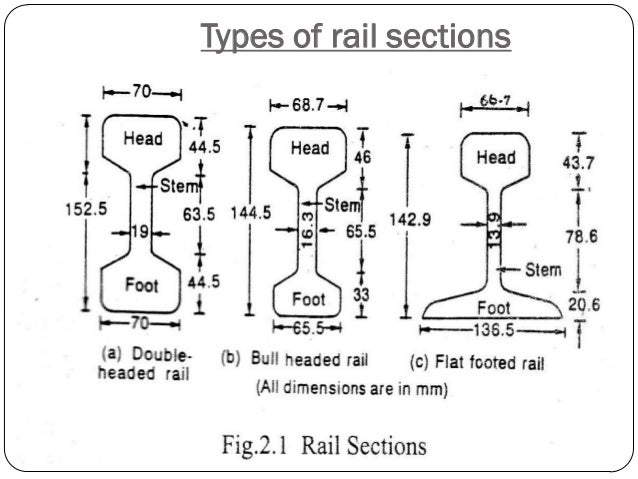
These rails indicate the early stage of development. It essentially consists of three parts,
  • Upper Table
  • Web
  • Lower Table
Both the upper and lower tables were identical and they were introduced with the hope of double doubling the life of rails. When the upper table is worn out then the rails can be placed upside down reversed on the chair and so the lower table can be brought into use. But this idea soon turned out to b wrong because due to continuous contract of lower table with the chair made the surface of lower table rough and hence the smooth running of the train was impossible. Therefore, this type of rail is practically out of use. Nowadays, these rails vary in lengths from 20 – 24. A 100 lb double headed rail is shown in the figure.

2. Bull Headed Rails
This type of rail also consists of three parts,
  • The Head
  • The Web
  • The Foot
These rails were made of steel. The head is of larger size than foot and the foot is designed only to hold up properly the wooden keys with which rails are secured. Thus, the foot is designed only to furnish necessary strength and stiffness to rails. Two cast iron chairs are required per each sleeper when these rails are adopted. Their weight ranges from 85lb to 95lb and their length is up to 60 ft.
3.  Flat Footed Rails
These rails were first of all invented by Charles Vignoles in 1836 and hence these rails are also called vignols rails. It consist of three parts
    Image result for types of railsimages
  • The Head
  • The Web
  • The Foot
The foot is spread out to form a base. This form of rail has become so much popular that about 90% of railway tracks in the world are laid with this form of rails.


Flat footed rails has the following advantages

  1. They do not need any chair and can be directly spiked or keyed to the sleepers. Thus they are economical.
  2. They are much stiffer both vertically and laterally. The lateral stiffness is important for curves.
  3. They are less liable to develop kinks and maintain a more regular top surface than bull headed rails.
  4. They are cheaper than bull headed rails.
  5. The loads from wheels of trains are distributed over large number of sleepers and hence larger area which results in greater track stability, longer life of rails and sleepers, reduced maintenance, costs, less rail failure and few interruptions to traffic.

Image result for types of railsimages

Classification of Railway Sleepers - Advantages and Disadvantages


1. Wooden Sleepers

Wooden sleepers are the ideal type of sleeper. Hence they are universally used. The utility of timber sleepers has not diminished due to the passage of time

Advantages of Wooden Sleepers

  1. They are cheap and easy to manufacture
  2. They are easy to handle without damage
  3. They are more suitable for all types of ballast
  4. They absorb shocks and vibrations better than other types of sleepers.
  5. Ideal for track circuited sections
  6. Fittings are few and simple in design
Image result for wooden sleepers in railway

Disadvantages of Wooden Sleepers

  1. They are easily liable to attack by vermin and weather
  2. They are susceptible to fire
  3. It is difficult to maintain gauge in case of wooden sleepers
  4. Scrap value is negligible
  5. Their useful life is short about 12 to 15 years.

2. Steel Sleepers

Due to the increasing shortage of timber in the country and other economic factors have led to the use of steel and concrete sleepers on railways

Advantages of Steel Sleepers

  1. It is more durable. Its life is about 35 years
  2. Lesser damage during handling and transport
  3. It is not susceptible to vermin attack
  4. It is not susceptible to fire
  5. Its scrap value is very good

Disadvantages of Steel Sleepers

    Image result for types of railway sleepers there advantages and disadvantages
  1. It is liable to corrosion.
  2. Not suitable for track circuiting
  3. It can be used only for rails for which it is manufactured
  4. Cracks at rail seats develop during the service.
  5. Fittings required are greater in number

3. Cast Iron Railway Sleepers

They are further divided into two categories:
  1. Cast iron pot type sleepers
  2. Cast iron plate type sleepers

Advantages of Cast Iron Sleepers

  1. Service life is very long
  2. Less liable to corrosion
  3. Form good track for light traffic up to 110 kmph as they form rigid track subjected to vibrations under moving loads without any damping
  4. Scrap value is high

Image result for cast iron sleepers in railwayDisadvantages of Cast Iron Sleepers

  1. Gauge maintenance is difficult as tie bars get bent up
  2. Not suitable for circuited track
  3. Need large number of fittings
  4. Suitable only for stone ballast
  5. Heavy traffic and high speeds (>110kmph) will cause loosening of keys and development of high creep

4. Concrete Railway Sleepers

R.C.C and prestressed concrete sleepers are now replacing other types of sleepers except in some special circumstances like bridges etc. where wooden sleepers are used. Concrete sleepers may be of two types:
  1. Mono Block Concrete Sleepers
  2. TWIN BLOCK Concrete sleepers

Advantages of Concrete Sleepers

    Image result for types of railway sleepers there advantages and disadvantages
  1. It is more durable having greater life (up to 50years)
  2. It is economical as compare to wood and steel.
  3. Easy to manufacture.
  4. It is not susceptible to vermin attack
  5. It is not susceptible to fire
  6. Good for track circuited areas

Disadvantages of Concrete Sleepers

  1. It is brittle and cracks without warning.
  2. It cannot be repaired, and required replacement.
  3. Fittings required are greater in number.
  4. No scrap value